

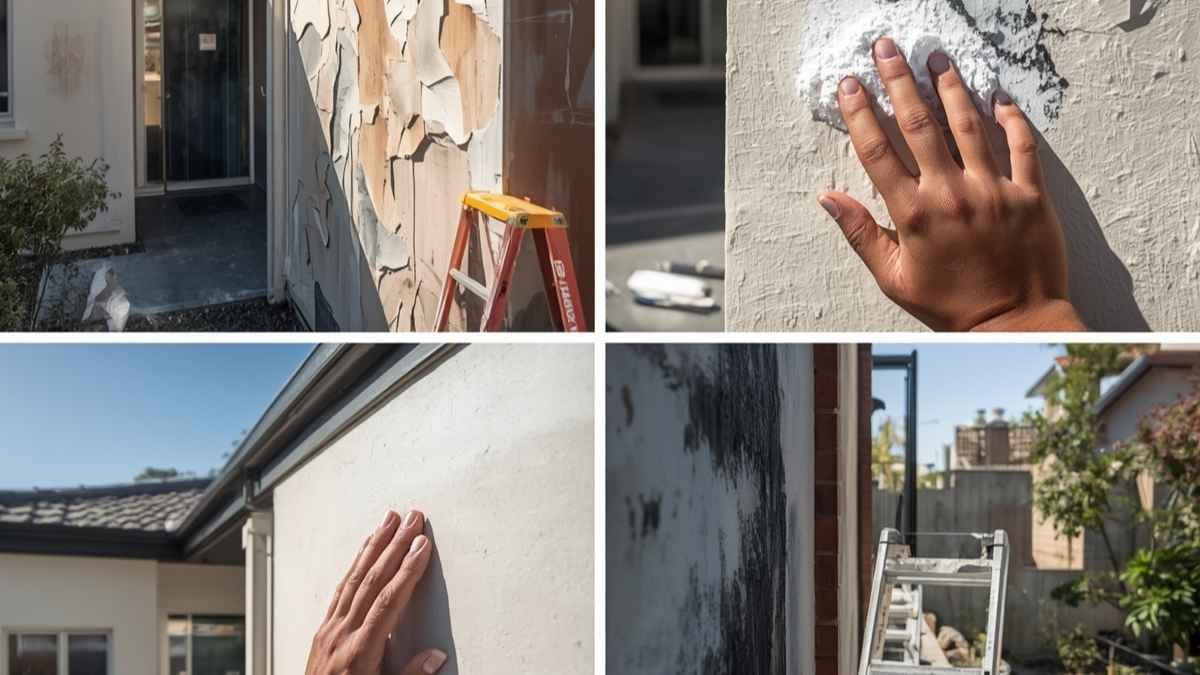

Most homeowners don’t repaint on a schedule — they wait until something catches their eye. The problem is, by the time paint failure is obvious at a glance, the underlying surface has often already started to suffer.
These are the most reliable signs that your home’s exterior is due for fresh paint — including a few that mean you really shouldn’t wait much longer.
1. Chalking or Powder on the Surface
Run your hand along an exterior wall. If it comes away with a white or coloured powdery residue, the paint is chalking. This is a normal result of UV degradation — the paint binders are breaking down and leaving loose pigment on the surface. Light chalking is cosmetic. Heavy chalking means the paint film has lost its protective integrity entirely.
A chalking surface is no longer shielding the substrate from moisture or UV. It’s telling you the protective function of the paint is gone, even if the colour still looks vaguely intact from a distance.
2. Visible Cracking, Peeling, or Flaking
This is the most urgent sign on the list. Peeling exterior paint almost always means moisture has infiltrated the paint film — either from an external source or from behind the wall. Once peeling starts, it spreads. The longer it’s left, the more prep work is involved when you do repaint.
Cracking comes in two forms: fine hairline cracking in the paint film itself (which good preparation and a quality repaint can address) and deeper cracks following the substrate — render, masonry, or timber. The second type needs substrate repair before repainting. If you’ve spotted either on your Bankstown home, our exterior painting services include a full crack assessment before any paint goes on.
3. Mould, Mildew, or Algae
Dark staining on exterior walls — particularly south-facing or shaded surfaces — is usually mould, mildew, or algae. These organisms penetrate the paint film over time and are a sign that the surface is retaining moisture. Surface washing can remove visible growth temporarily, but it returns quickly if the paint film has been compromised.
Painting over active biological growth without killing and removing it first is one of the most common mistakes in exterior painting. The organisms continue growing under the new paint film and cause failure from below within months. A proper repaint requires biocide treatment, full removal, and then painting — in that order.
4. Exposed Bare Timber or Bare Substrate
Any area where paint has worn through to bare timber, bare render, or bare masonry is a serious priority. These surfaces have zero protection from moisture and UV. Bare timber on eaves, fascias, and windowsills can begin absorbing moisture and developing rot within a couple of wet seasons if left unprotected.
Check these specific areas: windowsills and door frames, fascias and eaves, any horizontal ledge that catches water runoff. These surfaces wear faster than flat walls and often need attention before the main walls do.
5. Rust Staining From Metal Elements
Metal elements — gutters, downpipes, window frames, decorative fixings — can leach rust stains onto adjacent painted surfaces when their protective coating fails. Rust staining on rendered or painted walls indicates that the metal element needs rust treatment and repainting, and that the surrounding substrate may have been affected by water from the corroding component.
6. Patchy, Uneven Appearance
If your home’s exterior looks inconsistent — some sections faded, others still holding colour — it’s a sign that either the original paint job was inconsistent, or different elevations have aged at different rates due to sun exposure. This patchiness isn’t just cosmetic; it reflects uneven protection levels across the facade.
A full exterior repaint brings visual consistency back to the property — and gives you the opportunity to update the colour scheme if you’ve been thinking about it.
7. You Can’t Remember When It Was Last Painted
If you genuinely can’t remember when the exterior was last painted — or you know it was more than eight to ten years ago — it’s worth getting a professional assessment even without obvious visible failure. Some paint deterioration isn’t visible from the ground or in casual observation but becomes apparent on closer inspection.
8. Your Home Looks Noticeably Tired Next to Neighbours
This one sounds shallow but it’s a real signal. If nearby homes have recently been painted and yours looks noticeably more faded or worn by comparison, it affects your property’s perceived value — particularly relevant if you’re considering selling or renting within the next two years.
What to Do When You See These Signs
Don’t put it off. Paint that’s allowed to fully fail means significantly more prep work — and more cost — when you eventually repaint. Catching surface degradation early keeps the job straightforward and the cost predictable.
Icon Touch offers free on-site assessments for Bankstown and South-West Sydney homeowners. We inspect every surface, identify prep requirements, and give you a clear written quote. We cover Bankstown, Greenacre, Campsie, Revesby, Hurstville, and surrounding areas.
Our exterior painting services include full surface preparation, premium products, and a 5-year workmanship warranty. Get in touch today — the earlier we assess, the lower the repair cost.
[ Is Your Exterior Overdue? Book a Free Assessment With Icon Touch ]
