
The quality of a paint job is determined more by what happens before the brush touches the wall than by the brush itself. This is not a cliche — it is a practical truth that explains why two painters using the same paint product on the same surface can produce results that look completely different after two years.
What Preparation Actually Means
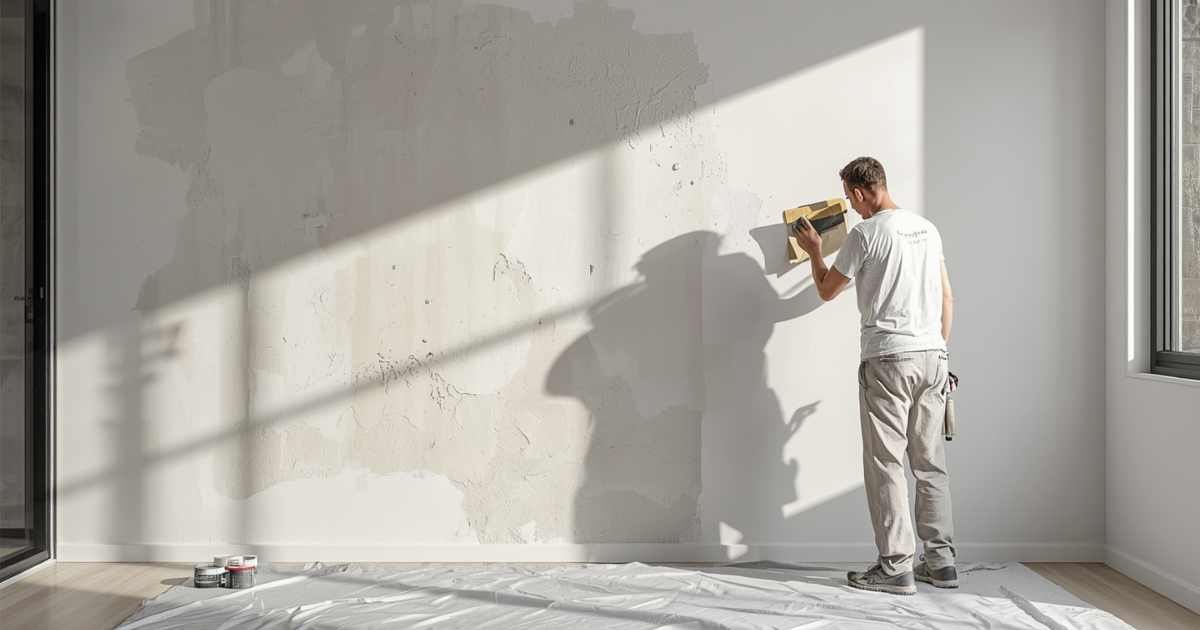
Preparation is not just filling a few holes and opening the paint tin. In a professional context, prep includes:
- Surface assessment — identifying anything that will affect adhesion or appearance: peeling, flaking, mould, moisture damage, tannin staining, or incompatible previous coatings
- Cleaning — sugar soap or equivalent to remove grease, dust, and surface contamination that prevents adhesion
- Sanding — scuff sanding to create a mechanical key for the new coat; heavier sanding to remove deteriorating paint or smooth filler
- Filling — cracks, nail holes, impact marks, and any surface defects that will telegraph through the new coat
- Priming — on bare surfaces, changed substrates, or where the existing coating is not compatible with the new product
What Skipped Prep Looks Like After 12 Months
- No sugar soap wash — new paint does not adhere to greasy walls and starts peeling from the edges of furniture impact marks
- No sanding on gloss surfaces — new paint never fully bonds to an unscuffed gloss coat and begins to lift when wiped
- Skipped primer on bare plaster — the bare area absorbs paint differently, causing a dull patch visible in raking light
- Mould painted over without treatment — mould continues growing under the paint and reappears within months
[ Screenshot: Paint peeling due to inadequate surface preparation — honest before example ]
Why Cheap Quotes Cut Prep
Preparation is the most time-consuming part of most painting jobs. A painter quoting significantly below the market rate is almost always doing so by reducing prep time. A $3,500 quote and a $5,500 quote on the same house might involve the same paint products. The $2,000 difference is likely four to six hours less of preparation work. That difference will show up in the finish quality and the longevity of the result. Sources: Master Painters Australia
The Professional Prep Walk-Through
Before starting any interior repaint job, an experienced painter should do a systematic walk-through of the space, noting every surface condition issue that will affect the preparation plan. This includes active mould that needs biocide treatment, loose or flaking paint that needs removal, cracks and holes that need filling, and any surfaces not compatible with the proposed paint product. If a painter arrives and starts applying paint without this walk-through, that is a signal that preparation is being treated as optional.
A Practical Calculation
If a properly prepared paint job lasts 10 years and an under-prepared one needs repainting in six, you are paying for two paint jobs in the time a well-prepared job would have needed one. At $5,000 per full-house repaint, the saving on the cheap quote costs you $5,000 more over a 10-year period.
How to Specify Preparation in Your Quote
Ask each painter to itemise: how they will clean the surfaces before painting, how they will handle visible surface defects, what primer they will use and on which surfaces, and how they will deal with any mould, moisture marks, or staining. A painter who answers these questions specifically is thinking about your job as a preparation problem, not just a coverage problem. That mindset produces results that last.
Final Thoughts
Prep is where paint jobs win or fail. When comparing quotes, ask painters specifically what prep steps they include and how they handle specific issues like mould, peeling, and surface damage.
At Icon Touch, surface preparation is itemised in every quote so you know exactly what is included. See also our guide on how long a house paint job takes for context on the time professional prep requires.
