
If you’ve ever watched a professional painting team start a job and wondered why they spend so long before the first drop of paint goes on — this explains it. Professional exterior preparation is the foundation of everything. It’s why a properly done job lasts eight years and a rushed one starts failing in two.
Here’s a transparent, step-by-step look at what an experienced team does before applying any paint to a home’s exterior — particularly relevant to the rendered and brick homes common across Bankstown and South-West Sydney.
Site Setup and Protection
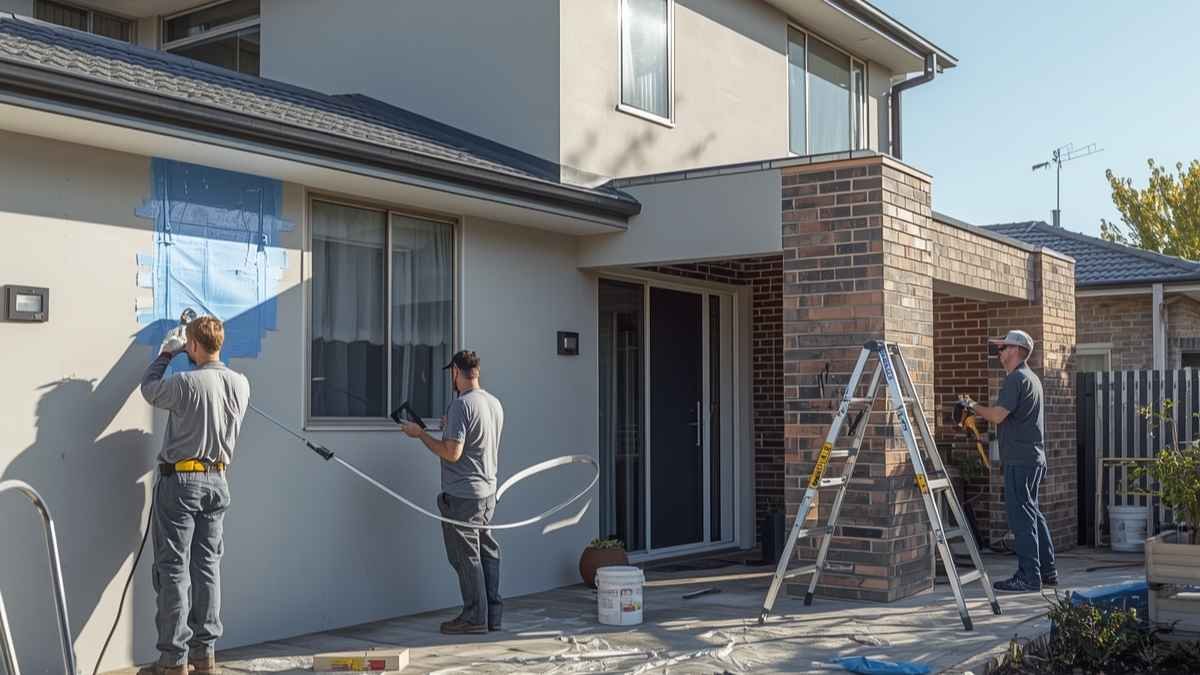
Before any physical preparation begins, everything that shouldn’t get paint on it gets protected. A professional team:
- Lays drop sheets over all surfaces beneath the work area — paving, garden beds, grass, and planting
- Covers plants and vegetation close to the building with fabric or plastic sheeting
- Moves pot plants, outdoor furniture, hoses, and items away from the work perimeter
- Masks windows, door frames, light fittings, outdoor power outlets, and letter boxes
A team that skips or rushes this step leaves paint on windows, drips on paving, and damage to gardens — all of which the homeowner has to deal with after the job is done.
High-Pressure Washing
Every exterior surface is pressure-washed before any preparation work. This removes surface chalk from degraded paint, accumulated dirt and pollution, visible biological growth (moss, algae, surface mould), salt deposits on coastal-adjacent properties like much of South-West Sydney, and any loose paint fragments.
After washing, the surface dries completely before further work — minimum 24 hours under normal Sydney conditions. Painting or priming over a damp surface is one of the most common causes of paint adhesion failure.
Biological Treatment
If mould, mildew, lichen, or algae is present on any surface, a biocide treatment comes after pressure washing. The biocide is applied to all affected areas, allowed to dwell for the required contact time (usually 30 to 60 minutes), and washed off. In more severe cases, a second treatment follows.
Skipping this step is surprisingly common among painters who want to move through a job quickly. The organisms that cause biological growth on Sydney exteriors have structures below the visible surface that pressure washing doesn’t reach. Without a biocide, the growth comes back through the new paint film within one wet season.
Surface Inspection and Repair
Once the surface is clean and dry, a detailed inspection identifies everything needing repair before painting.
Crack Assessment and Repair
Every crack is examined. Hairline cracks in the paint film itself are sanded and filled with flexible filler. Cracks in the render or masonry are assessed for depth and movement — static cracks are filled with compatible render or flexible caulk; active movement cracks require the underlying cause to be assessed and addressed, not just filled.
Hollow Render Detection
Tapping the render surface identifies hollow sections where the render has lost adhesion to the substrate behind it. Hollow render produces a noticeably different, dull thud compared to the sharp sound of properly bonded render. These sections must be cut out and replaced — there is no painting solution for hollow render. At Icon Touch, we identify these during the assessment stage so there are no mid-job surprises.
Timber Inspection
Any timber elements — eaves, fascias, weatherboards, windowsills, door frames — are checked for rot. Soft spots, discolouration, and spongy texture indicate rot that needs to be cut out and replaced, or treated with epoxy wood filler for minor areas, before any painting occurs. Painting over rotting timber doesn’t fix it — it hides an actively worsening problem.
Caulk and Sealant Inspection
Every joint between different materials — window frame and render, door frame and wall, flashing and cladding — is checked. Old caulk cracks and separates with age, creating direct pathways for water to enter the building. All failed caulk is removed and replaced with fresh flexible sealant before painting begins.
Sanding and Feathering
Areas where old paint has been patched or filled are sanded smooth to eliminate any visible edge or ridge. Paint ‘bridges’ across visible edges and creates texture lines that are especially noticeable on smooth rendered surfaces under raking light. Proper sanding and feathering creates a seamless surface for the topcoat.
Primer Application
Primer is applied to all areas that require it — and on an exterior job, that’s often more than just the repaired sections:
- Bare render or masonry needs a sealer primer to prevent uneven topcoat absorption
- Heavily chalking surfaces need a bonding primer to restore adhesion capacity
- Bare or repaired timber needs an oil or acrylic primer with knot treatment where applicable
- Bare metal needs a rust-inhibiting primer before any topcoat
- Previously painted surfaces in poor condition need a full acrylic primer before topcoating
Topcoat Application
With preparation complete, the topcoat is applied at the manufacturer’s recommended rate — not thinned, not over-extended. Premium exterior painting services include a minimum of two full coats, applied at intervals that respect the drying time of the specific product.
At Icon Touch, we use Dulux exterior products on our Bankstown jobs. The complete preparation process is what makes our 5-year warranty on exterior painting a genuine commitment rather than a marketing claim.
Why Corners Get Cut — and What to Ask Your Painter
The preparation steps above add time and cost to a job. They’re the steps that get reduced when a painter is competing on price. To verify what you’re getting, ask these questions directly:
- Will you pressure wash before any preparation begins?
- Do you treat biological growth with a biocide before painting?
- How do you identify and handle hollow render?
- What primer system will you use on bare surfaces?
- How many topcoats are included in the scope?
A painter who can answer all five clearly and specifically has a proper process. Contact Icon Touch today for a free quote — we’ll walk you through exactly what our preparation process involves for your specific property.
[ Book a Free On-Site Quote — Proper Prep, Lasting Results. Icon Touch Bankstown. ]
