

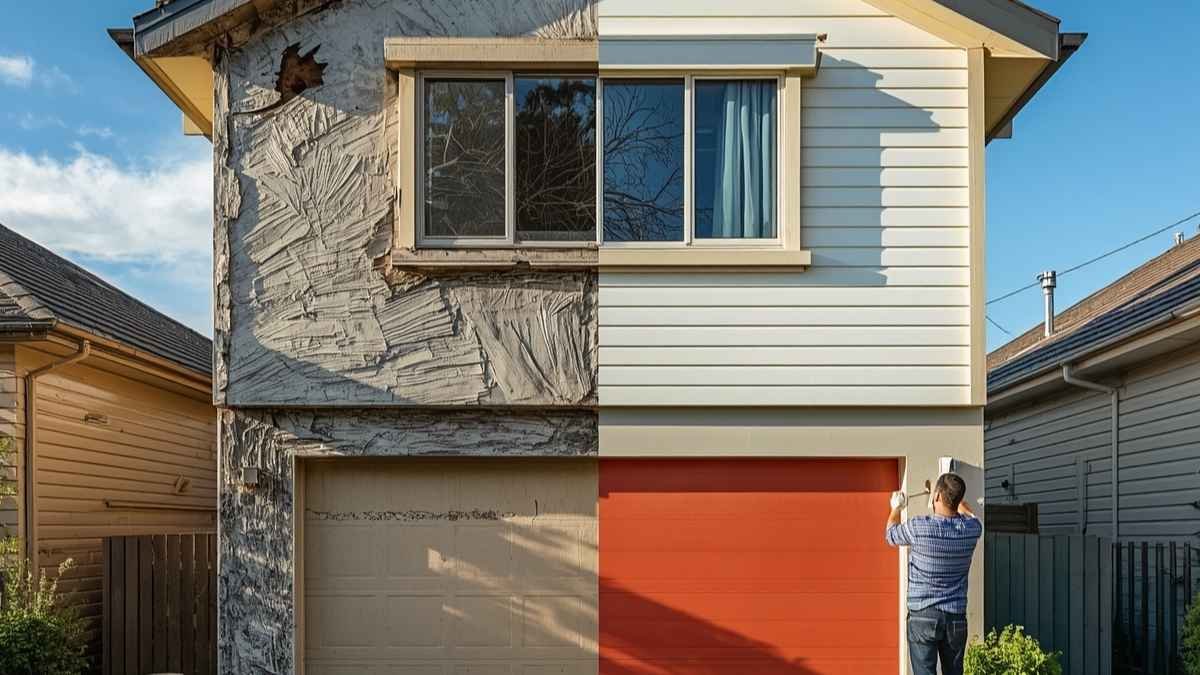

Exterior paint that fails within a year or two of application is one of the most frustrating — and expensive — outcomes a homeowner can deal with. The good news is that in the vast majority of cases, early paint failure is entirely preventable.
Here’s an honest look at why exterior paint fails in Sydney, what causes each type of failure, and what needs to happen during the next repaint to make sure it actually lasts.
1. Inadequate Surface Preparation
This is the number-one cause of premature exterior paint failure — and it’s almost always the result of rushed or cost-cut preparation. Paint is only as good as the surface it’s applied to. Quality paint over a dirty, chalking, or improperly primed surface will fail. Every time.
Proper exterior surface preparation includes:
- High-pressure washing to remove chalk, dirt, grime, and biological growth
- Mechanical sanding or scraping to remove loose and flaking paint
- Filling all cracks and imperfections in the substrate
- Applying the correct primer for the specific surface type
At Icon Touch, surface preparation is the most important part of every job. Our exterior painting services in Bankstown always include a complete preparation process — because skipping any step directly reduces how long the job lasts. This is also the reason we back every exterior job with a 5-year workmanship warranty.
2. UV Degradation
Sydney receives extremely high UV levels year-round. UV radiation attacks paint binders — the polymer resins that hold pigment together and bond the paint to the surface. As binders break down, the paint chalks, fades, and loses its elasticity. Once elasticity is gone, the paint can’t accommodate the natural expansion and contraction of the substrate, and cracking follows.
The solution: use UV-stable exterior products rated for Australian conditions. Premium brands like Dulux, Taubmans, and Haymes include UV-resistant binder systems developed specifically for Australian UV levels. They cost more per litre and last noticeably longer.
3. Moisture — from Outside and Within
Moisture attacks exterior paint from two directions simultaneously.
External Moisture
Sydney’s rainfall, coastal humidity, and morning dew are constant sources of external moisture. Paint applied over a damp surface, or on surfaces that trap water (cracked render, deteriorated caulk around window frames), will fail at the adhesion point. Moisture trapped beneath a paint film causes blistering and progressive peeling.
Internal Moisture
Rising damp and moisture vapour pushing out through walls from inside is particularly common in older Bankstown and Canterbury homes. If your exterior paint keeps peeling in the same spots despite repeated repainting, internal moisture is almost certainly the cause. Repainting over the symptom without addressing the source will never produce a lasting result.
An experienced painter identifies moisture problems during the assessment stage and recommends addressing the underlying cause before painting. This is part of every assessment Icon Touch does.
4. Painting in the Wrong Conditions
Applying exterior paint outside the product’s recommended parameters is a reliable way to shorten its lifespan:
- Painting above 35 degrees — surface dries before proper film formation below it
- Painting over damp or dewy surfaces early in the morning
- Applying paint with rain forecast within 24 to 36 hours
- Painting in strong direct sunlight on north-facing hot surfaces
- Recoating before the previous coat has adequately dried
Professional painters check surface temperature, humidity levels, and the forecast for 48 hours after application — not just on the day the paint goes on.
5. Wrong Product for the Substrate
Not every exterior paint is suitable for every surface. Common mismatches that cause early failure:
- Standard acrylic over heavily chalking surfaces without a bonding primer
- Rigid paint system applied over flexible acrylic render
- Interior paint used on exterior surfaces
- Water-based topcoat over oil-based primer without compatibility testing
Matching the product to the substrate is a technical decision that requires product knowledge. This is one of the reasons experience in local conditions matters — different substrates are common in different Sydney suburbs.
6. Only One Coat Applied
Single-coat exterior paint jobs are a cost-cutting measure with predictable consequences. One coat doesn’t provide adequate film build to protect the substrate, doesn’t deliver consistent colour coverage, and fails faster at the film edges. Professional quality exterior repaints use a minimum of two full topcoats — three where the substrate is demanding or the colour change is significant.
7. Biological Growth Painted Over Without Treatment
Mould, mildew, lichen, and algae are living organisms. Painting over them without first killing and removing them means the organisms continue growing under the new paint film. They break the adhesion from below within months. Bubbling, surface mould bleed-through, and rapid re-contamination are all signs of this mistake.
Correct treatment involves a biocide application, adequate dwell time, pressure washing, and in persistent cases multiple treatments — before any paint goes on. It adds time and cost, and it’s completely necessary on any surface that has had biological growth.
The Formula for a Long-Lasting Exterior Job
- Full surface preparation — pressure wash, sand, fill, prime
- Biocide treatment on any biological growth before painting
- Address moisture sources before applying any coating
- Use premium exterior paint rated for Australian UV conditions
- Apply minimum two full topcoats at the correct spreading rate
- Use the right product for the specific substrate
- Paint within the product’s recommended temperature and humidity parameters
Icon Touch — Building Exterior Paint Jobs That Last
Icon Touch has been repainting rendered homes, brick homes, and commercial exteriors across Bankstown and South-West Sydney for over 11 years. Every exterior job follows the full preparation process, uses premium products suited to Sydney conditions, and comes with a 5-year workmanship warranty.
If your exterior paint has failed or you want to make sure your next repaint lasts, get in touch today for a free on-site assessment.
[ Stop Repainting the Same Problem — Call Icon Touch for a Lasting Finish ]
