

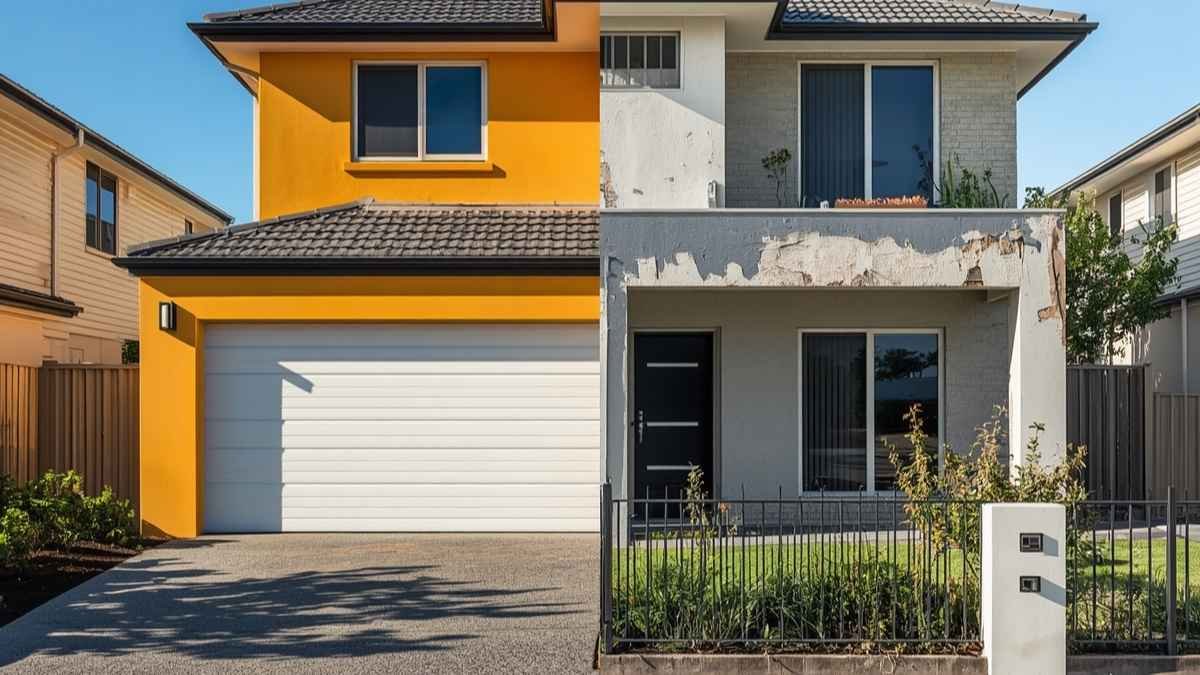

There’s no single answer — and anyone who gives you one without knowing your surfaces, your paint quality, and your local environment is guessing. But there are reliable guidelines, and understanding them helps you repaint at the right time: not so early that you’re wasting money, and not so late that the substrate starts suffering.
Here’s an honest look at repainting frequency for Sydney homes, with specific context for South-West suburbs like Bankstown, Canterbury, and Campsie.
Why Sydney’s Climate Ages Paint Faster Than You’d Expect
Sydney’s weather is more demanding on exterior paint than most homeowners realise:
- UV intensity — Sydney sits within one of the highest UV zones in the world. UV attacks paint binders directly, causing fading, chalking, and brittleness over time
- Humidity and temperature swings — seasonal expansion and contraction stress the paint film, particularly on rendered and timber surfaces
- Coastal salt air — most of metropolitan Sydney, including South-West suburbs, is within 20km of the coast. Salt-laden moisture accelerates paint degradation and metal corrosion
- Urban pollution — in Bankstown and surrounding areas, fine particulates settle on exterior surfaces and gradually break down sheen and adhesion
Taken together, Sydney homes generally need repainting more frequently than similar properties in cooler, inland parts of Australia.
Interior Repainting — How Long Before You Really Need It?
Bedrooms and Living Rooms: 7 to 10 Years
In low-traffic rooms with reasonable ventilation and no water leaks, quality interior paint can look fresh for close to a decade. The main driver of earlier repainting in these rooms is lifestyle change — new colour direction, new furniture — rather than actual paint failure. If you used a premium washable product, seven to ten years is a realistic expectation.
Kitchens and Bathrooms: 4 to 7 Years
Moisture, steam, grease, and cleaning products all accelerate wear in these spaces. Anti-mould paints help significantly, but the environment is genuinely demanding. Expect to repaint kitchens and bathrooms sooner — particularly if you’re seeing bubbling, staining, or recurring mould near exhaust points despite regular cleaning.
Hallways, Stairs, and High-Traffic Areas: 3 to 5 Years
These spaces take a physical beating. Children, pets, bags at shoulder height, and constant hand contact near light switches mark walls quickly. Even premium washable paints show real wear in these areas within a few years. A fresh coat in a hallway makes a disproportionate difference to how the entire house feels — and it’s typically the most affordable repaint you can do.
Exterior Repainting — Where Sydney’s Climate Really Bites
North and West-Facing Walls: 5 to 7 Years
These walls receive the most direct sunlight across the day. UV fading, chalking, and brittleness show up noticeably within five to seven years — often sooner on lower-quality jobs. If your north-facing exterior wall is already looking dull and powdery when you rub it, you’re at or past the repaint point.
South and East-Facing Walls: 7 to 10 Years
Less direct UV exposure means longer paint life on these elevations. The typical issue is biological — moss, lichen, or mildew before fading becomes the problem. Annual washing extends the lifespan significantly. Our exterior painting services in Bankstown include full surface treatment as part of every preparation process.
Rendered Surfaces: 5 to 8 Years
Render expands and contracts with temperature, which stresses the paint film over time. Hairline cracking in the paint is a sign the film is past its prime. Left too long, those cracks allow moisture penetration — which creates a significantly more expensive repair problem than a timely repaint would have been.
Timber Elements (Eaves, Fascias, Weatherboards): 4 to 6 Years
Timber is the most demanding exterior surface to maintain. It absorbs moisture, expands and contracts significantly, and can begin to rot if the protective coating fails completely. If your Bankstown home has timber eaves or fascias, inspect them annually and repaint on a 4 to 6-year cycle as a minimum.
Signs It’s Time — Without Counting the Years
- Exterior paint is chalky or powdery when you rub it
- Visible cracking, flaking, or peeling on any surface
- Mould or mildew that keeps coming back despite cleaning
- Interior walls looking grimy or yellow despite regular wiping
- Exposed bare timber or patches where paint has fully failed
- Your home looks noticeably more tired than recently painted neighbouring properties
The Cost of Waiting Too Long
Delaying a repaint rarely saves money — it usually costs more. Paint that’s allowed to fully fail means significantly more prep work: stripping, scraping, extensive priming, and sometimes substrate repairs before painting can even begin. The financial difference between a timely repaint and an overdue remedial job can easily be thousands of dollars.
How Paint Quality Affects How Long You Wait
Premium paints genuinely last longer. Dulux Weathershield or Haymes ExteriorPro applied over a properly prepared surface will outlast a budget product by two to four years — more than covering the price difference per litre. This is why Icon Touch specifies quality products on every exterior job and backs the work with a 5-year workmanship warranty.
Not sure whether your home is due for a repaint? Contact Icon Touch today for a free on-site assessment. We’ll give you an honest opinion and a clear picture of what — if anything — needs to happen.
[ Not Sure If It’s Time? Book a Free Assessment With Icon Touch ]
