


A professional paint job represents a real investment in your home. Maintaining it properly can extend the interval between repaints by years. Maintaining a freshly painted home does not require specialised products or significant ongoing effort. Most of it comes down to a few consistent habits and knowing how to address small issues before they become large ones.
The First 30 Days Are Critical
Modern water-based paints feel dry within an hour or two but do not reach full cure hardness for 28 to 30 days. During this period:
- Avoid scrubbing interior walls with abrasive cleaners or harsh chemicals
- Do not press furniture hard against newly painted walls
- Treat any marks gently with a lightly damp cloth rather than a scrubbing pad
After 30 days, most quality interior paints have cured sufficiently to handle normal cleaning.
Regular Cleaning Extends Paint Life
Painted interior walls should be wiped down gently once or twice a year to remove the buildup of dust, grease, and hand marks that accumulate in high-traffic areas. A diluted sugar soap solution on a soft cloth is the most effective and safest approach for most interior paint types. Pay particular attention to: areas around light switches and door handles; kitchen walls near the cooktop; and hallway walls at shoulder height.
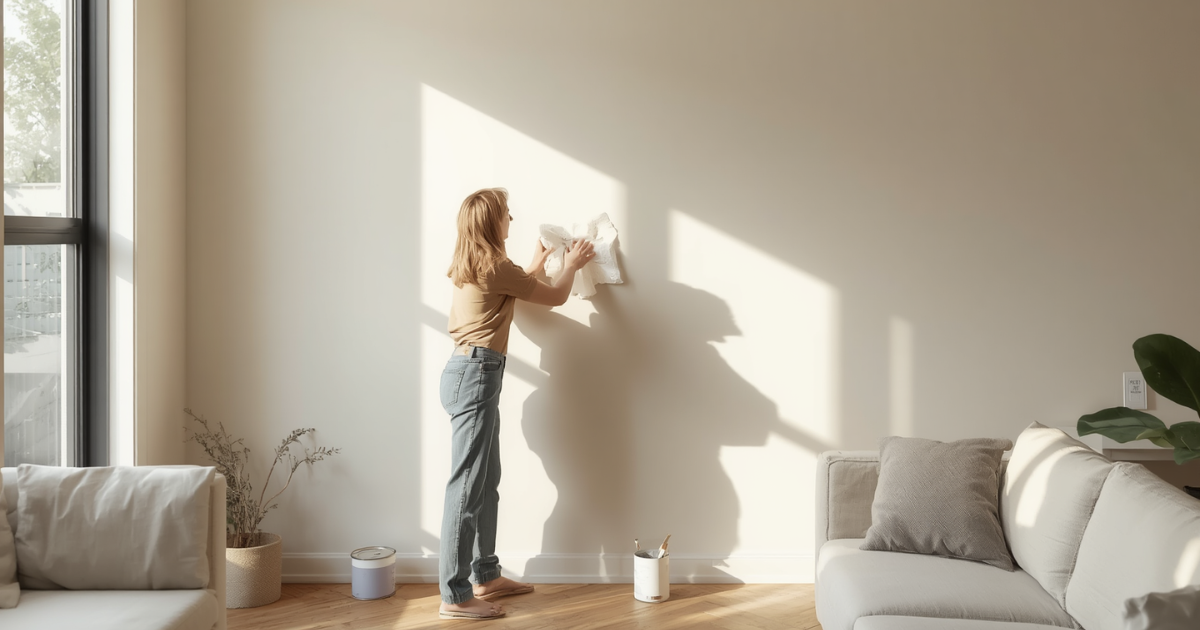
[ Screenshot: Proper interior wall cleaning technique with a soft cloth ]
Exterior Maintenance
Exterior paint deteriorates faster than interior paint due to constant UV, moisture, and temperature cycling. Annual maintenance habits that extend life:
- Inspect gutters and downpipes every six months — blocked gutters cause water overflow that accelerates paint failure on fascias and soffits
- Check for moss or mould in shaded sections, particularly south-facing walls under eaves, and treat with a garden spray moss killer before it establishes
- Look for cracking or lifting paint around window frames and door frames — early signs that moisture is getting behind the paint film, and addressing them early prevents full-scale peeling
Touch-Ups: When and How
Small touch-ups are much more effective when the paint is still relatively fresh. The longer a small chip or mark is left, the more the surrounding paint has faded, making a touch-up less invisible. Keep a small quantity of your wall paint, labelled with the room, colour name, and mixing formula. A touch-up done with the original paint is almost invisible. A touch-up done with paint from a fresh tin, even in the nominally same colour, can be visible because batch-to-batch variation exists in production.
Addressing Small Damage Before It Grows
Paint damage compounds if left unaddressed. A small chip at the corner of a skirting board stays small if touched up within a few months. The same chip left for a year or two accumulates further mechanical impact, moisture ingress, and dirt penetration that makes it progressively harder to address invisibly. A twice-yearly interior inspection catches these issues at the simple stage.
When Maintenance Is No Longer Enough
Exterior paint typically needs repainting every 8 to 12 years in Sydney conditions, and interior paint every 8 to 15 years depending on the room’s use. If you are cleaning marks more frequently, if the colour looks noticeably faded, or if touch-ups are becoming increasingly visible, it is time to consider a full repaint.
Final Thoughts
The smartest way to protect a paint investment is simple: clean regularly, address small issues early, and plan for repainting before the surface reaches the point of significant deterioration.
Our residential painting team can advise on maintenance schedules as part of any job. See our guide on how often a Sydney home needs repainting for expected repaint intervals by room and surface type.
